TerraNova: A Foundation Model for the Anthropocene
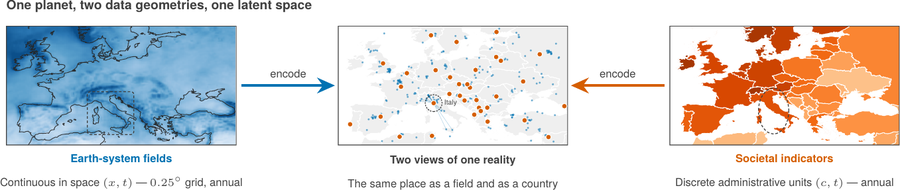
A foundation model trained on 1,024 physical and societal records, coupling gridded Earth-system fields with national indicators.
A foundation model trained on 1,024 physical and societal records, coupling gridded Earth-system fields with national indicators.
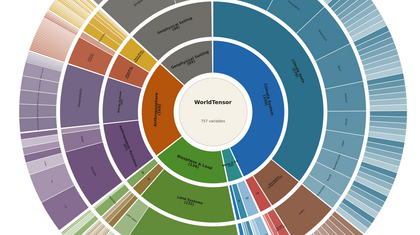
A harmonised global dataset aligning hundreds of environmental and socioeconomic variables to a standardised 0.25° grid.

Couples climate emulation with empirical impact functions: 19-70% of human development losses from overshoot are recovered on return.
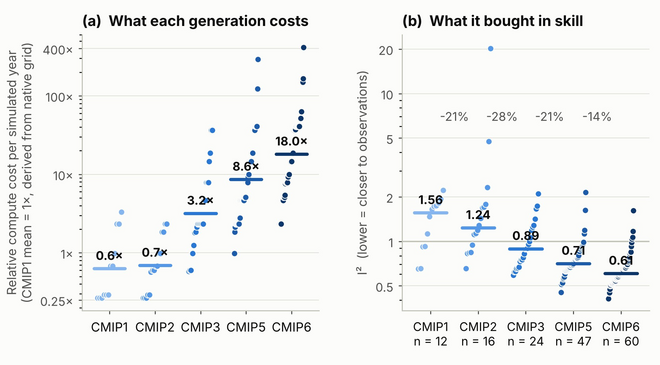
Across 159 CMIP models, error falls 13.5% per doubling of compute; proposes a skill–energy framework and standard energy reporting.
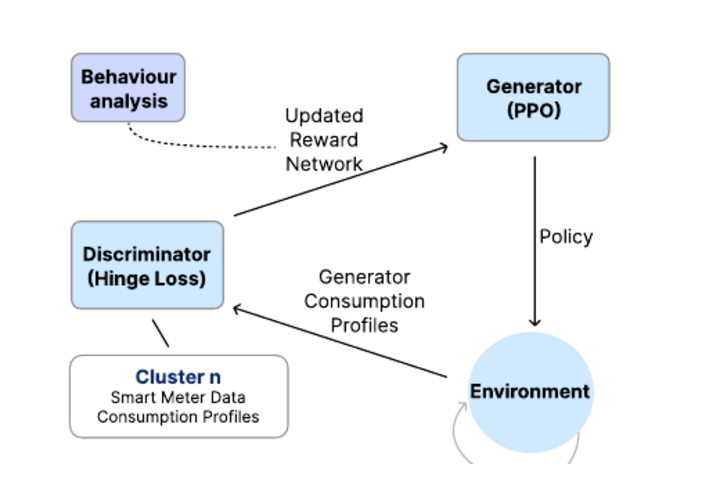
Uses Inverse Reinforcement Learning to recover household reward functions and track shifts in Italian cooling behaviour, 2021-2023.
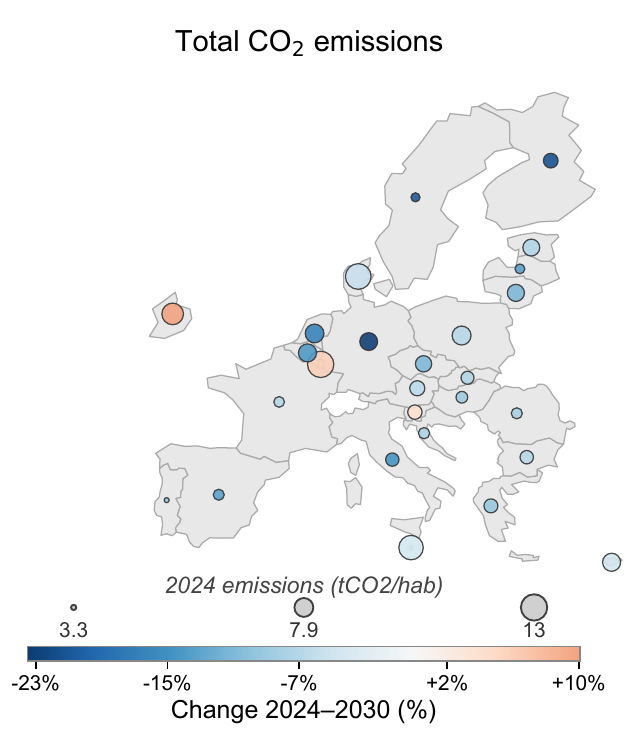
Deep-learning projections of sectoral CO2 trajectories across EU27 states show current trends overshooting the 2030 target by 35%.
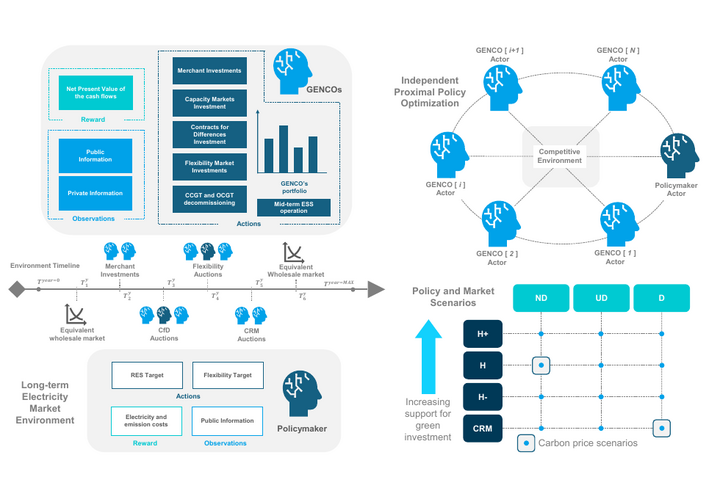
Uses a multi-agent RL model of the Italian power system (MARLEY) to test how suppressing the EU ETS price affects costs and emissions.
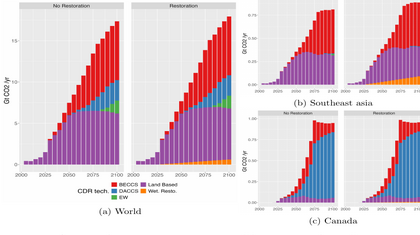
Extends the WITCH integrated assessment model to size wetland restoration's carbon dioxide removal potential against its methane trade-off.
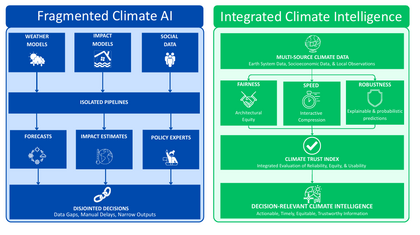
A perspective proposing AI as an integration layer linking climate forecasts, impact assessment and institutional decision-making.
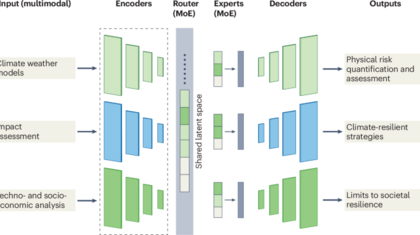
A commentary in Nature Climate Change on using artificial intelligence to support cross-disciplinary climate change research.
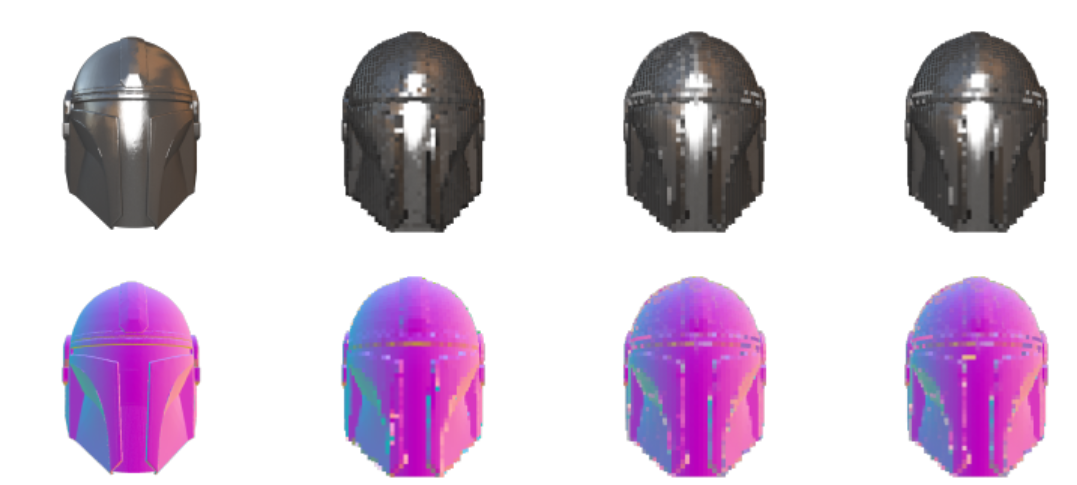
Introduces a fast parallel voxelization method and a hierarchical SGGX clustering representation for microgeometry level of detail.
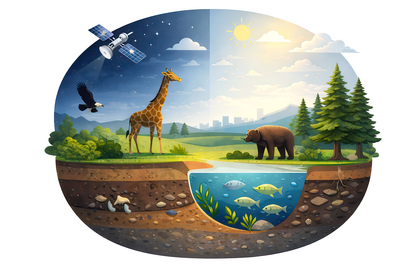
A perspective arguing that ecological foundation models, trained on multimodal ecological data, could help unify fragmented data and theory.
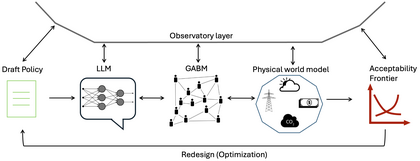
Proposes using LLMs as cultural world models in agent-based simulations to co-optimize climate policy for efficacy and social legitimacy.
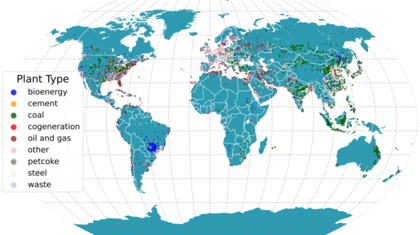
A Nature Scientific Data paper presenting a harmonized dataset of global air quality monitoring station metadata.
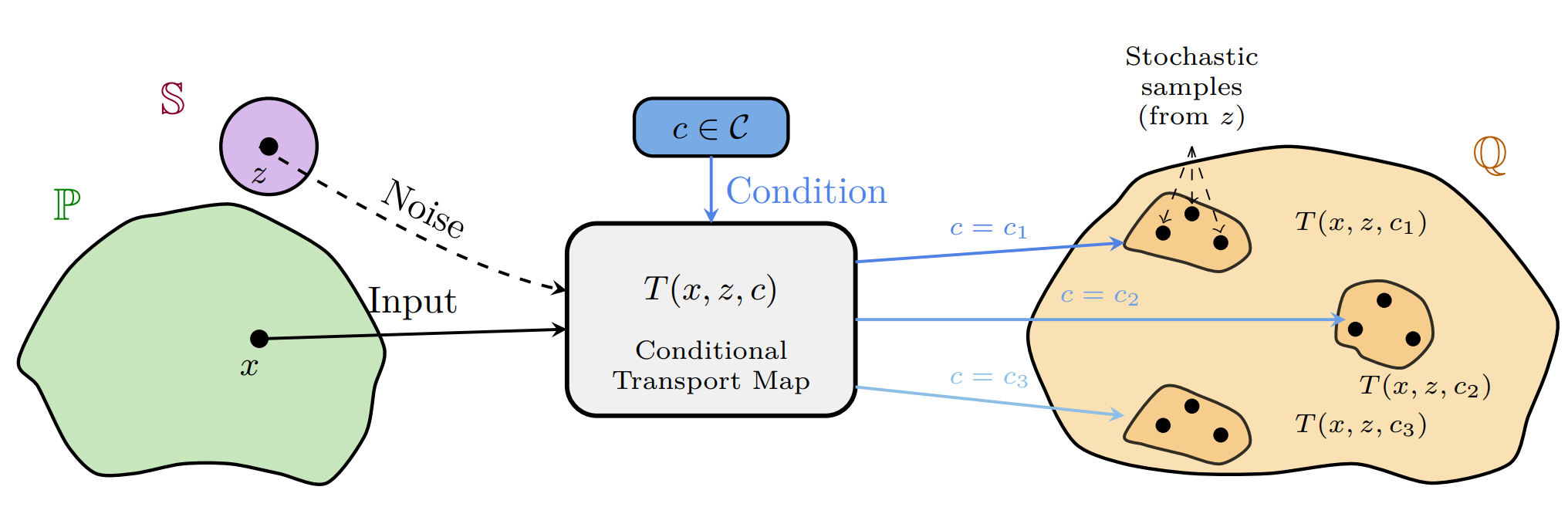
A hypernetwork-based framework for learning conditional optimal transport maps, applied to global sensitivity analysis of black-box models.
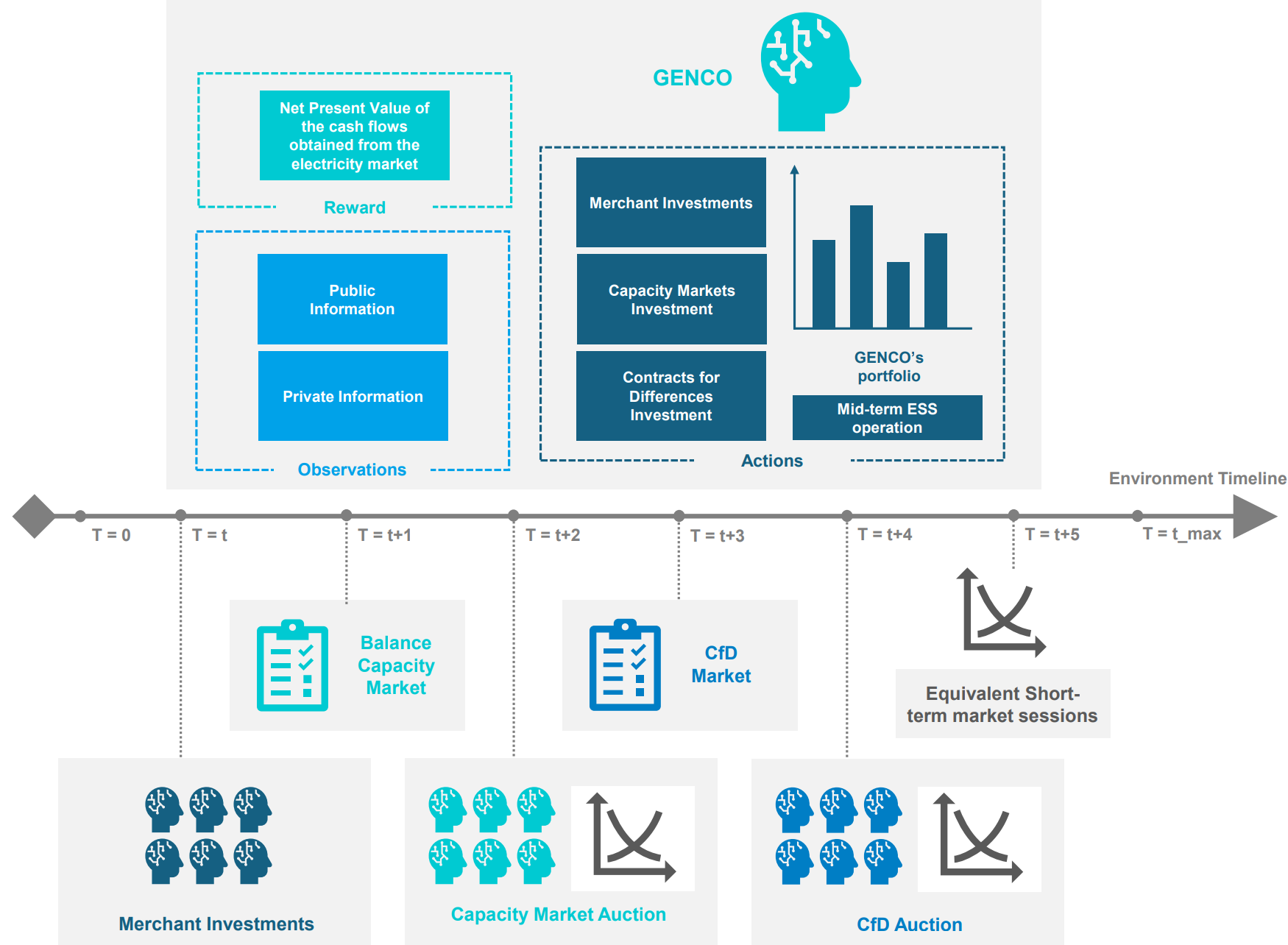
Applies MARLEY, a multi-agent reinforcement learning framework, to assess long-term electricity market design under decarbonization targets.
Estimates material reflectance, opacity and transmittance from a single flatbed-scanner image using a cycle-consistency formulation.

A differentiable metric, trained as a classifier, that quantifies texture tileability and can guide tileable texture synthesis methods.

PhD thesis on neural network methods for digital materials and radiance encoding: material capture, texture synthesis and neural rendering.

A neural BTF representation that uses a guidance image to jointly address BTF compression, tiling and extrapolation.

Combines a normalizing flow and an implicit neural representation to compress environment maps and sample them for global illumination.

Presents a dual-scale optical capture system for material digitization, published in ACM Transactions on Graphics (Proc. SIGGRAPH).

Recovers normals, specularity and roughness from a single diffuse image via a generative network, with test-time uncertainty quantification.

Estimates fabric mechanical parameters from a casual depth-camera capture using a sim-to-real learning framework.

Generates tileable texture maps from a single exemplar by tiling the latent space of an adversarially trained generative network.

Surveys deep learning approaches to intrinsic image decomposition, classifying methods by decomposition type, priors and architecture.

Propagates spatially varying material attributes, such as texture maps or stylizations, to larger samples via image-to-image translation.